Learn how to find, analyze, bid on, buy, and sell bank-owned property packages.
This book shows you the professional side of bulk REO investing — how distressed assets move through banks, how bids are made, how bulk tapes work, how to communicate with institutions, and how to structure yourself as a credible buyer, broker, or deal facilitator.
Digital delivery after purchase. Educational real estate investing material by Duncan Wierman.
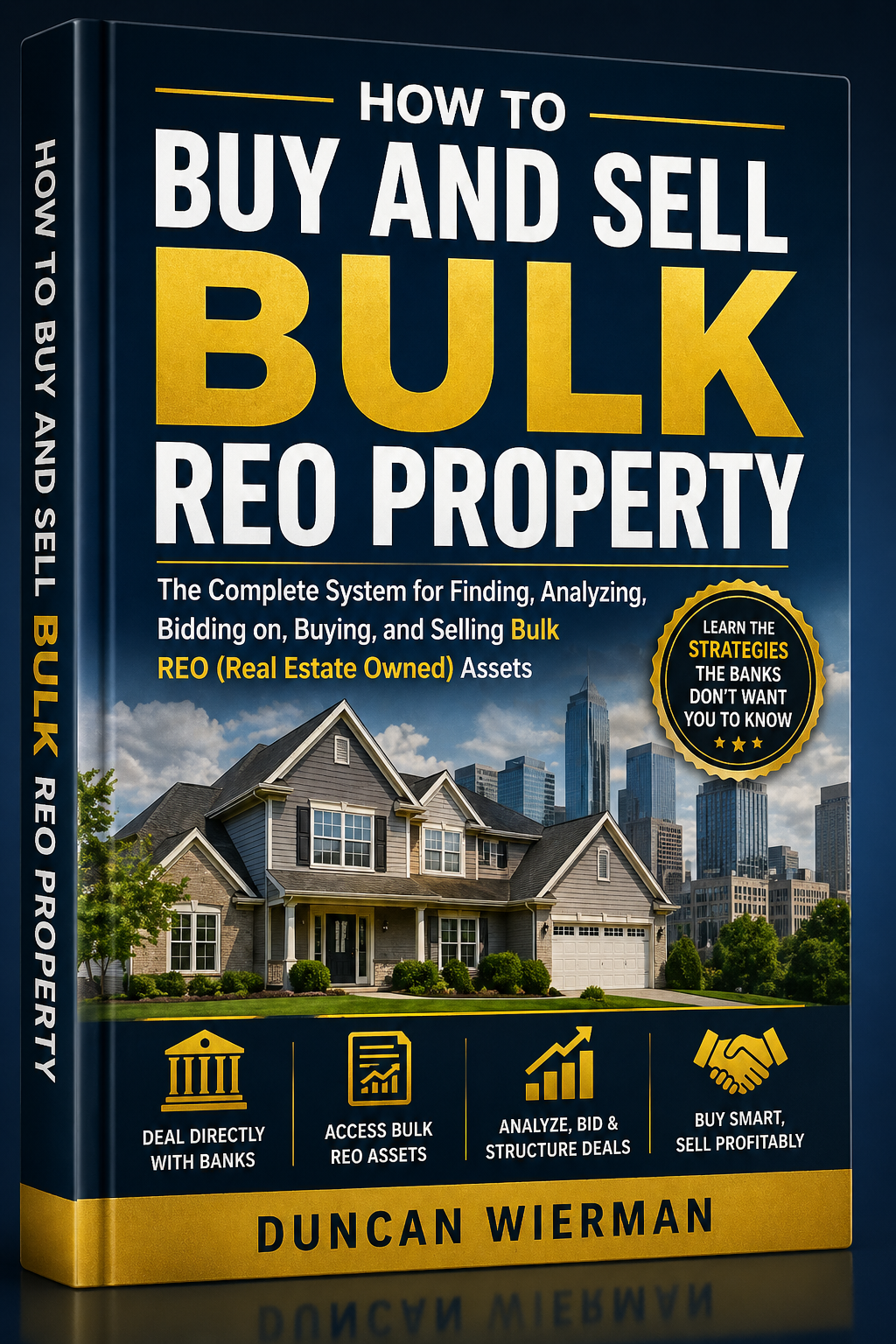
Bulk REO investing is built around one core idea: financial institutions often need to move foreclosure inventory off their books, and professional investors can create opportunity by understanding how to locate, evaluate, bid on, and resell these assets.
Learn how to approach lenders, banks, savings and loans, portfolio lenders, direct lenders, and other financial institutions that may control REO inventory.
Learn the difference between sanitized tapes, full tapes, mixed tapes, non-performing note samples, commercial tapes, and property-level asset information.
Understand bid pricing, proof of funds, buyer mandates, seller mandates, fee agreements, escrow, closing procedures, and resale strategy.
The book is designed as a working field guide for understanding the real-world structure, terminology, paperwork, and deal flow of the bulk REO business.
Learn how assets move from performing loans to sub-performing notes, non-performing loans, foreclosure, bankruptcy risk, redemption periods, and final REO asset sale.
Understand sanitized lists, indicative bids, due diligence, title review, BPOs, final bids, contract negotiation, funds transfer, and recording completion.
Learn how bids are commonly calculated as a percentage of unpaid principal balance and how factors like geography, value, occupancy, asset type, and document type matter.
Learn practical ways to identify institutions, approach sellers, ask qualifying questions, and organize your search for bank-owned property packages.
Learn how to speak professionally with financial institutions, identify decision makers, qualify selling institutions, and understand their internal process.
Learn buyer qualification, hedge fund buyers, proof of funds, LOIs, NCNDs, master fee agreements, escrow agreements, and purchase and sale agreements.
Bulk REO investing requires professionalism, credibility, paperwork, funding relationships, bank communication, buyer qualification, and the ability to move quickly when real opportunities appear.
The investors and brokers who last in this niche understand one thing: banks and serious buyers do not want confusion. They want organized people who understand deal flow, documentation, funding, timelines, and closing procedure.
This book gives you the vocabulary, framework, and process map to start operating with more confidence.
From bank conversations to contracts, the book walks through the mechanics of finding, pricing, bidding, financing, and moving bulk REO assets.
Sanitized tapes, full tapes, mixed tapes, commercial tapes, and asset-level data.
Letter of intent guidelines, sample order language, and bid documentation.
Buyer purchase capacity, proof of funds, and how serious buyers are qualified.
Buyer mandate attestation, seller mandate attestation, and deal authority.
Fee structures, master fee agreements, paymaster concepts, and broker roles.
Cash, self-directed IRAs, stock loans, hard money, transactional funding, and private capital.
BPOs, title review, documents, liens, taxes, litigation, and marketable title.
Escrow agreements, REO purchase agreements, fund transfer, and recording completion.
Learn how to find banks, lenders, portfolio holders, and other institutions that may have bulk REO or distressed assets available.
Understand how sanitized tapes are used for initial pricing and why full tapes may only be shared after credibility, interest, and buyer qualification are established.
Learn how bulk REO bids are structured, why pricing is often based on unpaid principal balance, and how initial bids lead into due diligence.
Review property values, title, liens, taxes, occupancy, asset condition, documents, litigation issues, and other risk factors before final bid submission.
Understand the role of LOIs, proof of funds, NCNDs, fee agreements, escrow agreements, purchase agreements, and closing timelines.
Learn how investors may work with hedge funds, private buyers, buyer mandates, and cash purchasers to move REO portfolios profitably.
Get the complete digital book for $97 and start learning how bulk REO assets are found, analyzed, bid on, financed, purchased, and resold.
This is for real estate investors, brokers, consultants, and deal facilitators who want a serious introduction to the bulk REO niche.
Click the PayPal button below to purchase How to Buy and Sell Bulk REO Property. After payment, buyers should be sent to your thank-you or download page.
Secure payment is processed by PayPal. After purchase, buyers should be redirected to your private download or thank-you page. Educational content only. Results depend on effort, experience, funding, market conditions, and legal compliance.
This product is for informational and educational purposes only. It is not legal, financial, tax, brokerage, lending, or real estate investment advice. Purchasers are responsible for complying with all applicable laws governing business practices, agency relationships, broker licensing, lending, securities, and real estate transactions. No income, profit, funding, deal, or investment result is guaranteed.
REO stands for Real Estate Owned. It generally refers to property that has gone through foreclosure and returned to the lender or financial institution after failing to sell at auction.
Bulk REO investing involves buying or helping facilitate the sale of multiple bank-owned properties or distressed assets as a package instead of purchasing one property at a time.
Not necessarily. Some readers may use the book to understand brokering, facilitating, buyer qualification, seller mandates, deal flow, or how to work with capital partners. However, actual bulk purchases often require serious funding or qualified buyers.
Yes. The book covers concepts related to letters of intent, proof of funds, buyer and seller mandates, NCNDs, master fee agreements, paymasters, escrow agreements, and REO purchase and sale agreements.
No. Real estate investing involves risk. This book is educational. Your results depend on your effort, funding, relationships, market conditions, professional advice, and legal compliance.