How to Make Money Selling Houses You Don’t Own
Learn how to connect sellers, buyers, investors, wholesalers, agents, contractors, and funding partners — then structure win-win deals where you get paid for bringing the right people together.
Instant digital access after purchase. Built for real estate entrepreneurs, wholesalers, networkers, consultants, and deal finders.
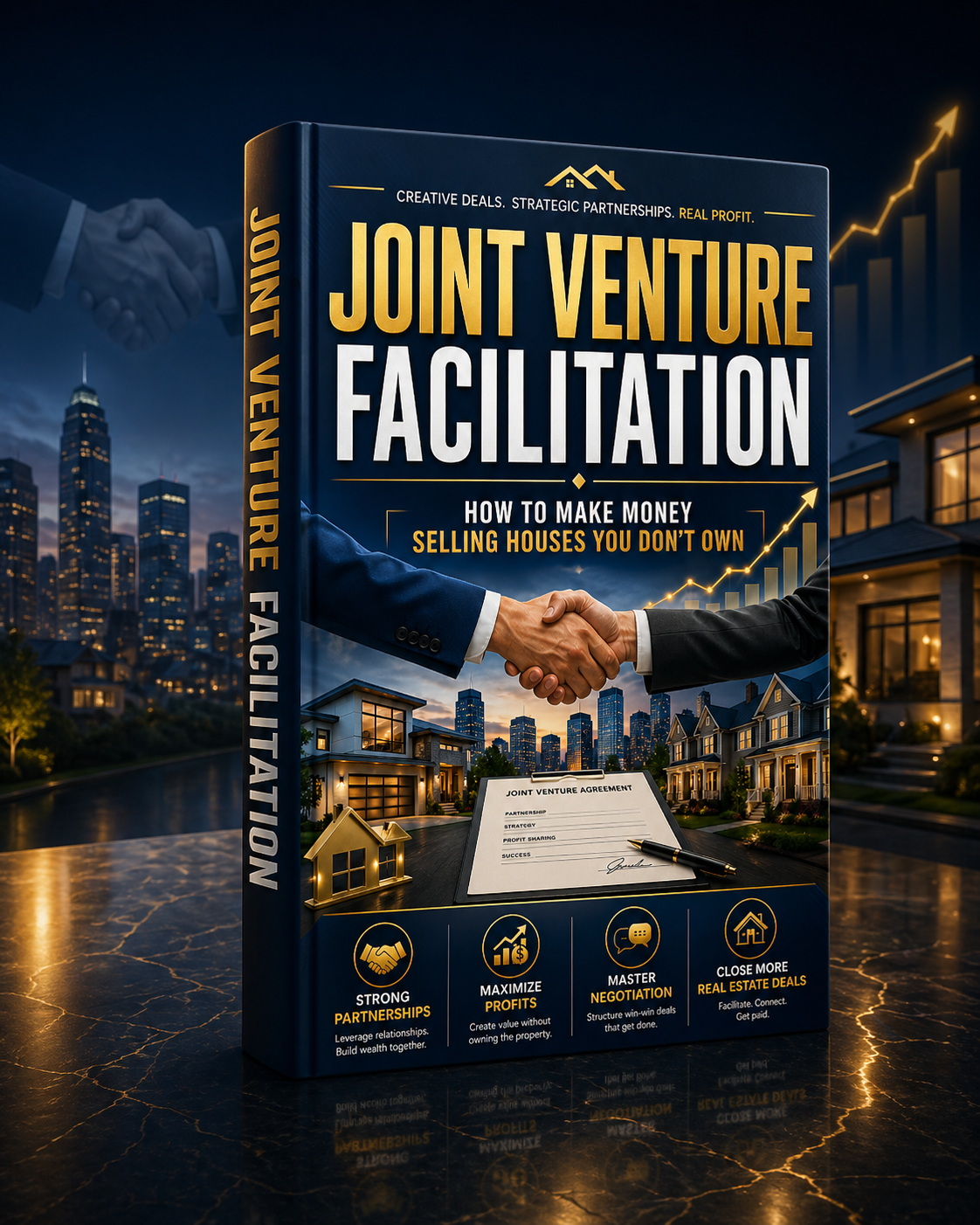
Most people think real estate profit only comes from buying, fixing, renting, or flipping property. Joint venture facilitation opens another path: finding the opportunity, connecting the right parties, and helping the deal get done.
Distressed sellers, tired landlords, inherited properties, investor leads, off-market deals, contractor referrals, and local relationships can all become deal sources.
Many deals fail because the right seller, buyer, investor, funder, or operator never meet. Your value is in making the connection and guiding the conversation.
When properly disclosed, documented, and structured, you can earn fees, referral compensation, consulting income, or profit participation depending on the deal.
This model is built around relationships, clear communication, legal compliance, and value creation — not hype or fake guru tricks.
Learn how to spot sellers, properties, and investor needs before the opportunity is obvious to everyone else.
Understand what makes a deal attractive, what questions to ask, and how to avoid wasting time on dead-end conversations.
Connect the deal to the buyer, investor, operator, agent, lender, or service provider who can actually move it forward.
Use clear expectations, written disclosures, and defined roles so everyone understands what you bring to the transaction.
Protect your time with simple written agreements, referral terms, consulting agreements, or JV documents where appropriate.
Once you understand the process, you can build a pipeline of sellers, buyers, investors, and strategic partners.
You do not need to be the richest person in the room. You need to become useful, trustworthy, organized, and connected.
Every day, property owners need solutions, investors need deals, and buyers need access. The person who understands how to connect those needs can become valuable fast.
The difference between “I know someone” and “I can facilitate this deal” is process, positioning, documentation, and confidence.
This book gives you a practical starting point for understanding how real estate JV facilitation works and how to position yourself professionally.
Understand the role you are playing so you can avoid confusion and present yourself professionally.
Use conversations, local intelligence, seller problems, investor relationships, and referral channels to find deal flow.
Learn the questions that uncover motivation, timeline, property condition, price expectations, and deal viability.
Use simple agreements, disclosure, and role clarity before spending time moving a deal forward.
Turn random conversations into a system for attracting sellers, investors, agents, lenders, contractors, and buyers.
“Most beginners chase deals with no plan. The smarter play is learning how to become the person who connects opportunity, capital, and execution.”
— Joint Venture Facilitation PrincipleReal estate laws, brokerage rules, finder’s fee rules, and referral compensation rules can vary by state. This book is educational and should be paired with proper legal guidance when money is involved. That protects you, your partners, and the deal.
Get the complete book for $97 and learn how to start thinking like a real estate deal facilitator.
This is for serious action-takers who want to build practical deal-making skills, not just collect more theory.
Click the PayPal button below to purchase Joint Venture Facilitation. After payment, buyers should be sent to your thank-you/download page.
Secure payment is processed by PayPal. After purchase, buyers should be redirected to your private download or thank-you page. Educational content only. Results depend on effort, market conditions, and legal compliance.
No. The point of JV facilitation is that you may be able to create value by finding opportunities, connecting parties, helping structure conversations, and documenting your role before a transaction moves forward.
Not necessarily, but this is exactly why you must understand your state’s laws. If you are negotiating real estate for others or expecting compensation tied to a transaction, brokerage licensing rules may apply. Get legal guidance before collecting fees.
Yes, but beginners must be careful. Start by learning the language, building a network, understanding basic deal analysis, and documenting everything clearly. Do not pretend to be an expert if you are not one yet.
Start by building two lists: people who have real estate problems and people who solve real estate problems. Then learn how to qualify opportunities and make useful introductions with clear expectations.