
BOSTON REIA • INVESTOR NEWS & INSIGHTS
Data Shows Private Listings Cost Home Sellers Money
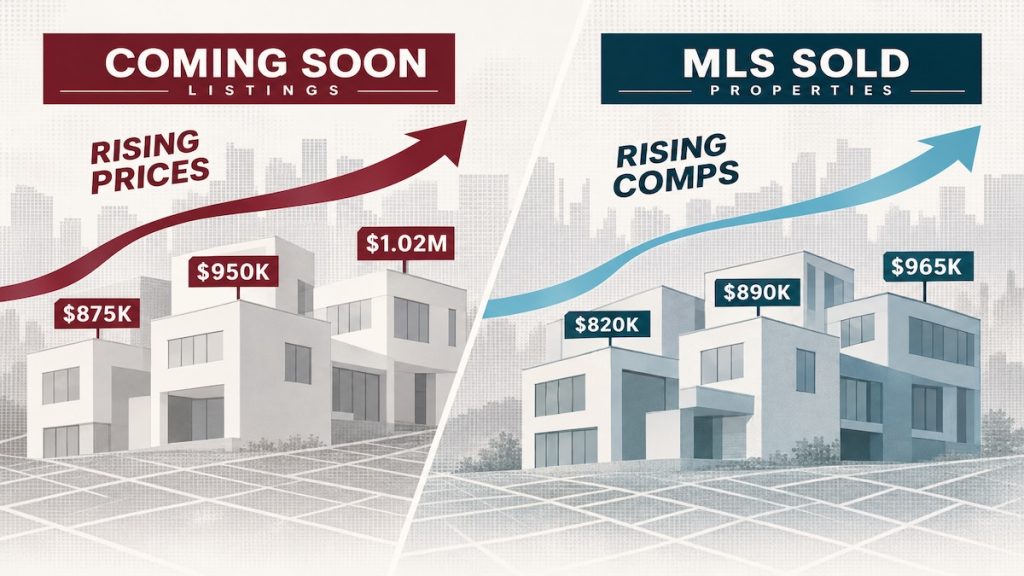
Compass’s “See It First” puts private listings in the spotlight. What does the sales data say?
Compass wants buyers to discover homes on its site before those homes reach the broader market. But a study of more than 10 million home sales raises a question for sellers: Does early access help their sale price, or does keeping a listing private limit it?
On September 22, Compass launched “See It First” as part of its largest Compass.com redesign in a decade. The feature brings coming-soon and private exclusive listings from its nine brands into one early-access showcase. Compass said traffic to its site grew 56% year over year in August and backed the launch with a multimillion-dollar advertising campaign.
The next day, HousingWire reported on an ARELLO study examining more than 10 million residential transactions from January 2024 through June 2026. Its findings point to an important distinction between coming soon and staying private.
Coming-soon listings—homes marketed ahead of their MLS debut—sold for about $9,200 more than comparable MLS listings in the mid-market and nearly $17,000 more at the high end. Listings that remained private and off the MLS sold for roughly $5,000 less in the mid-market and $3,500 less at the high end.
The distinction matters: Pre-marketing followed by broad MLS exposure was associated with higher sale prices. Keeping a listing off the MLS was associated with lower ones.
The study also found that coming-soon listing volume rose 13% in the year ending June 2026, while private-listing volume fell 3%.
The price gap for private listings varied by neighborhood. Compared with MLS listings, private listings sold for about 0.88% less in majority-white areas, 2.21% less in majority non-white areas and 3.33% less in majority-Hispanic areas. ARELLO cautioned that those differences “do not establish causation or unlawful discrimination,” but said they warrant “further examination.”
Compass CEO Robert Reffkin has called the Clear Cooperation Policy “anti-competitive and anti-consumer” and said Compass “has not and will not adhere” to it. The industry should be willing to question its rules. It should also be candid with sellers about what the transaction data suggests: Early marketing and permanent limits on exposure are not the same strategy.
Compass deserves credit for making homes easier to discover early and for keeping listing agents visible on its platform. Its coming-soon offering may give sellers a useful runway before a full-market launch. The decision to remain private deserves a separate, careful conversation.
What agents should do
Before listing a home, explain both options in dollars. A seller may benefit from building interest before going live on the MLS; they should also understand the potential trade-off if the home never reaches that broader audience.
If a seller chooses a private listing, document the discussion, including the possible cost of reduced exposure. Then let the seller make an informed decision.
Above all, use precise language. Coming soon can be a step toward full-market exposure. Private means limiting that exposure. Agents owe sellers a clear explanation of the difference—and a strategy grounded in the seller’s goals, not a platform’s slogan.
Darryl Davis, CSP, is a national speaker, real estate coach and bestselling author of How to Become a Power Agent® in Real Estate. Learn more at darrylspeaks.com.
This column does not necessarily reflect the opinion of HousingWire’s editorial department or its owners.